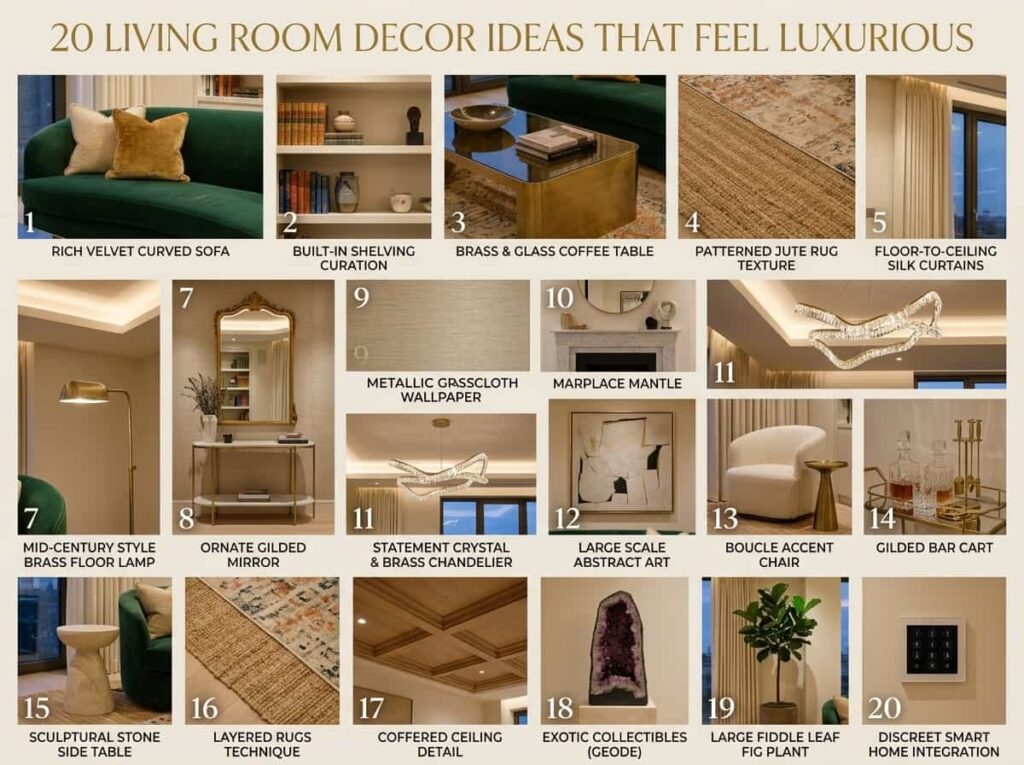

Most living rooms look finished but feel flat. The furniture is there. The rug is there. The art is on the wall. But something is missing — and most people can’t name exactly what it is.
What’s missing is atmosphere. Not more stuff. Not a bigger sofa or a new lamp. Atmosphere — the sense that a room has been thought about rather than assembled.
Living rooms in 2026 are shifting away from layouts where every piece of furniture points toward one screen. The spaces drawing the most attention now feel layered, conversation-driven, and visually immersive through sculptural seating, oversized textures, architectural shelving, and statement materials that turn the room itself into the focal point.
These 20 living room decor ideas focus on atmosphere. Each one is something you can implement without a contractor, a designer, or a budget that makes you nervous.
What Makes a Living Room Feel Luxurious in 2026?
Luxury living rooms in 2026 are all about blending comfort with elevated design — think plush textures, sculptural furniture, and statement lighting that feels effortlessly curated. It’s no longer just about expensive pieces; it’s about creating a space that looks refined, feels inviting, and reflects your personal style.
Three things determine whether a living room feels expensive or not:
– **Material quality** — what surfaces look and feel like up close
– **Lighting layers** — how many light sources exist and where they sit
– **Negative space** — what is deliberately left empty
Get those three right. The rest follows.
1. Move Away From the TV-Centered Layout
This is the single biggest shift in living room design for 2026 — and the one most people resist because it feels counterintuitive.
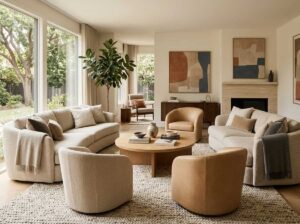
While formal living rooms once embraced traditional seating and fixed layouts, in 2026, the perfect living room layout feels relaxed and unregimented, a flexible set-up that can be adjusted for everyday living.
Pull seating away from the wall. Angle chairs toward each other rather than toward the screen. Create a conversation zone that exists independently of the television.
The room immediately feels more intentional like a space designed for people rather than for a device.
2. Choose Curved Furniture Over Sharp Angles
Low modular sofas, marble coffee tables, curved lounge chairs, smoked glass accents, dark monochrome palettes, and gallery-style shelving are replacing generic furniture arrangements that leave living spaces feeling flat and predictable.
Curved sofas and rounded armchairs soften a room on contact. They make hard architectural spaces — square rooms, angular windows, flat walls feel warmer and more considered.
You don’t need to replace everything. One curved piece a semicircular sofa, a round coffee table, an oval mirror — shifts the visual register of the whole room.
3. Layer Three Types of Lighting
This is the change that delivers the most impact per dollar spent in any living room.
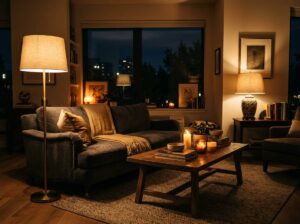
Most living rooms have one overhead light and nothing else. That single source creates flat, uniform brightness that works against every other design decision in the room.
Replace it with three layers:
– **Ambient** — a dimmer on the overhead, or no overhead at all
– **Task** — a floor lamp beside the sofa for reading
– **Accent** — table lamps, wall sconces, or candles that create pools of warmth
Dark walls and layered lighting push the space toward luxury lounge styling.
The result is a room that looks completely different at 7pm than it does at noon — and both versions feel intentional.
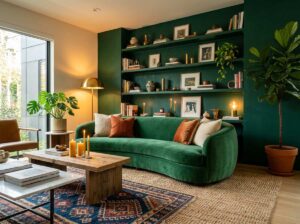
4. Add a Deep Accent Wall
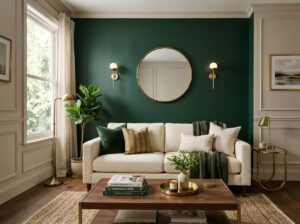
Bold accent colors return in measured doses. Deep emerald, terracotta, or navy used on one wall or through accessories creates drama without overwhelm.
One wall in a saturated color does more for a living room than repainting the entire space. The contrast between the accent wall and the surrounding neutral walls creates depth that a single-color room simply cannot achieve.
The wall behind the sofa is the right choice. It frames the seating arrangement and makes the entire setup feel anchored and deliberate.
I painted one wall in my own living room deep forest green last year — it took three hours and cost less than $40. The room looked completely different. Not just different — better.
5. Invest in One Sculptural Piece of Furniture
Instead of filling rooms with more decor, homeowners are choosing fewer pieces with stronger shapes and richer finishes.
One piece with genuine visual weight an unusual coffee table, a statement armchair, a sculptural lamp — does more for a room than ten decorative objects.
The piece doesn’t need to be expensive. It needs to be interesting. A thrifted armchair in an unexpected color. A coffee table with an unusual material. A floor lamp with a shape that reads as sculptural rather than functional.
6. Use Smoked Glass and Brass Together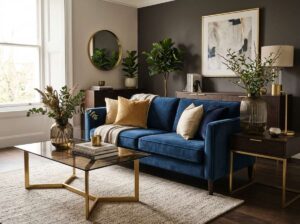
Colorful glass is pulling a lot of weight in 2026 living rooms. It appears across lighting, furniture, and decorative objects — placed to catch sunlight by day and artificial light at night, the glass shifts in intensity, animating the room’s palette.
Smoked glass and brass is the material combination of 2026. Together they read as expensive, warm, and considered — without requiring the budget of genuine luxury pieces.
Start with small applications: a smoked glass vase, brass drawer pulls, a glass-topped side table with brass legs. The combination photographs beautifully and looks even better in person.
7. Layer Multiple Rugs
A single rug grounds the seating area. Two layered rugs create a moment.
The formula: a large neutral jute or wool rug as a base, with a smaller patterned rug on top, positioned slightly off-center. The overlap should be generous at least 18 inches of the smaller rug sitting on top of the larger one.
This technique visually enlarges the seating area and adds the layered, collected quality that expensive interiors always have and budget ones rarely do.
8. Choose Velvet for at Least One Upholstered Piece
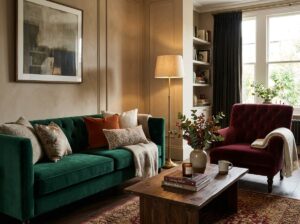
Velvet is the fabric that photographs flat and feels extraordinary in person. No other upholstery material adds warmth, depth, and tactile quality in the same way.
Bold velvet chairs create a stronger focal point than neutral armchairs and immediately define the conversation area. Rounded arms and low backs keep the pieces modern without feeling oversized.
Deep teal, rich burgundy, forest green, or warm caramel — all work in different living room palettes. The color matters less than the fabric itself. Velvet in any color reads as intentional and considered.
9. Build a Gallery-Style Shelf Instead of a TV Unit
Geometric mirror panels reflect light from multiple angles and create movement across the wall. Glass, marble, and dark wood surfaces create contrast without requiring oversized furniture pieces.
Floor-to-ceiling shelving styled as a gallery wall — with books, objects, plants, and art mixed across multiple levels — creates the kind of visual complexity that a television unit cannot. It makes the wall an experience rather than a background.
Style the shelves with the 40/60 rule: 40% objects, 60% empty space. More than that and it reads as cluttered. Less and it reads as unfinished.
10. Bring in Natural Materials
Material costs keep climbing, and it looks like people are done with disposable furniture. Interior design trends 2026 obsess over one-off pieces with origins buyers can actually trace. The focus is also on hyper-local craft.
Natural materials — rattan, jute, linen, raw wood, unglazed ceramic — add warmth that synthetic alternatives cannot replicate. They also age well, which means a room built around natural materials looks better after three years than it did on day one.
Start with the rug (jute or wool), the throw (linen or cotton), and one ceramic object. Those three additions shift the material palette of a room more than most furniture changes.
11. Add Living Plants at Different Heights
Plants do something that no inanimate object can: they change. They grow, they move in air currents, they respond to light. That sense of life in a room is something money can’t buy and plants provide for free.
Place them at three different heights: floor level (a large monstera or fiddle-leaf fig), surface level (trailing pothos on a shelf), and hanging (a ceiling-mounted plant or macramé hanger). The vertical layering makes the room feel designed from floor to ceiling rather than just at furniture height.
12. Use Mirrors Strategically
A mirror opposite a window doubles the natural light in a room. A mirror behind a lamp multiplies the warm glow across the space. A large floor mirror in a corner makes a small room feel genuinely larger.
The placement matters far more than the size or price of the mirror. A $30 thrifted mirror in the right position does more than a $500 mirror hung on the wrong wall.
13. Choose Quality Curtains and Hang Them High
Curtains are the most overlooked living room element — and the one that makes the most dramatic difference when done correctly.
Hang the rod as close to the ceiling as possible, regardless of where the window actually sits. Floor-length curtains that pool slightly on the ground add height and gravitas that no other single change achieves. The difference between curtains hung at window height and curtains hung at ceiling height is the difference between a standard room and a designed one.
Fabric matters here. Linen, velvet, and heavy cotton drape properly. Synthetic fabrics hang flat and look cheap regardless of color.
14. Edit Ruthlessly
Minimal luxury defines this year’s aesthetic. Think fewer, better pieces with artisan craftsmanship. Our testing shows rooms with 3-5 quality statement pieces feel more curated than cluttered spaces.
The most common mistake in living room decor is too much — too many cushions, too many objects, too many pictures. Every additional piece below a certain quality threshold makes the whole room look cheaper.
Remove everything from the room mentally and add back only what earns its place. A piece earns its place if it adds beauty, function, or both. If it adds neither, it should go.
15. Style the Coffee Table in Odd Numbers
Coffee table styling is where most living rooms fall apart visually. The usual approach — a tray, a candle, and a book — looks staged because it’s too deliberate and too symmetrical.
Style in odd numbers: 3 objects or 5 objects, never 2 or 4. Vary the heights. Let one object overhang the tray edge slightly. Add one element of organic texture — a small plant, a stone, dried botanicals.
The goal is collected rather than arranged. That distinction is everything.
—
16. Create a Reading Corner
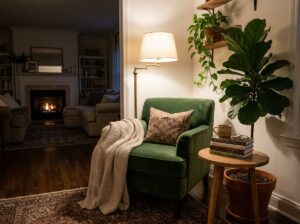
A dedicated reading corner a good chair, a floor lamp, a small side table — adds a second focal point to any living room. It breaks the single-sofa-facing-television layout and creates the sense that the room is designed for more than one activity.
The chair doesn’t need to match the sofa. In fact, it’s better if it doesn’t. The contrast between the two seating pieces adds visual interest and makes the room feel more layered and collected.
17. Add Architectural Interest to the Walls
Textured wall panels behind the sofa prevent the darker palette from feeling flat. Linear ceiling slats draw attention upward and make the room feel taller and more intentional.
Wall panels, picture rails, dado rails, or simple vertical battens added to an existing wall create architectural interest without structural work. Painted the same color as the wall, they add shadow and depth. Painted a contrasting color, they create a feature.
This is one of the highest-return DIY projects in interior design. A wall with vertical battens spaced 8 inches apart, painted the same color as the surrounding wall, transforms a flat surface into something that reads as considered and designed.
18. Introduce Pattern Through Cushions and Throws
Pattern is the easiest way to add personality to a neutral living room — and cushions and throws are the least permanent way to introduce it.
Mix patterns at different scales: a large geometric cushion, a medium floral throw, a small textured pillow. Keep the color palette consistent across all three — pattern mixing works when the colors are related, even if the patterns themselves are completely different.
19. Use a Dark Coffee Table to Anchor Light Upholstery
Light sofas and pale upholstery need a dark anchor to stop the seating area from floating visually.
A dark coffee table — black lacquer, dark walnut, smoked glass — grounds the arrangement and creates the contrast that makes light upholstery look intentional rather than timid. Without that anchor, a pale sofa reads as unfinished. With it, the same sofa reads as confident.
20. Light a Candle Every Evening
This is the simplest idea on this list and the one most people skip because it seems too small to matter.
It matters. A lit candle at 7pm changes the atmosphere of a living room in a way that no decorating decision achieves. The flickering light, the subtle scent, the signal to the brain that the day is shifting into evening — these things cost almost nothing and deliver something that interior design alone cannot.
Start there. Everything else builds on top.
Living Room Decor Ideas — Quick Reference Guide
| Element | What Works | What to Avoid |
|———|————|—————|
| **Color** | One deep accent wall | All-white or all-neutral |
| **Lighting** | 3 layered sources | Single overhead light |
| **Furniture** | Curved, sculptural | Matching sets |
| **Textiles** | Velvet, linen, wool | Synthetic fabrics |
| **Objects** | 3-5 quality pieces | Cluttered surfaces |
| **Plants** | 3 heights | All the same size |
| **Curtains** | Ceiling height, floor length | Window height |
Living Room Decor Ideas FAQ
What are the biggest living room trends for 2026?
The dominant directions in 2026 are curved furniture, layered lighting, deep accent walls, and a move away from TV-centered layouts. Quiet luxury — fewer pieces with better materials — is replacing the cluttered maximalism of recent years. Natural materials, velvet upholstery, and smoked glass are the material choices defining the best living rooms this year.
How do I make a small living room look luxurious?
Three changes make the biggest difference in a small living room: hang curtains at ceiling height to add visual height, place a mirror opposite your main window to double natural light, and choose furniture with exposed legs to maintain visual flow across the floor. Keep the color palette tight — two or three tones — and edit objects ruthlessly. A small room with five great pieces looks more luxurious than the same room with fifteen average ones.
What colors make a living room feel expensive in 2026?
Deep emerald, warm terracotta, rich navy, and charcoal are the colors making living rooms feel expensive in 2026. Used on a single accent wall with neutral surroundings, these tones add depth and drama without overwhelming the space. Warm neutrals — cream, oat, and warm greige remain the best background colors for layering richer tones through furniture and textiles.
How many decorative objects should a living room have?
Three to five quality objects is the right number for most living room surfaces. Coffee tables work best with three objects at varying heights. Shelves should follow the 40/60 rule: 40% objects, 60% empty space. More than five objects on any single surface almost always looks cluttered, regardless of the individual quality of the pieces.
What type of rug works best in a living room?
A large wool or jute rug as a base layer, sized so that at least the front legs of every sofa and chair sit on it, creates the most grounded and luxurious effect. Layer a smaller patterned rug on top for added depth. The most common mistake is choosing a rug that’s too small a rug should anchor the entire seating arrangement, not just sit under the coffee table.