
Introduction
Most people buy flowers, put them in a vase, and call it done. The vase sits in one spot for a week, the flowers die, and nothing about the room actually changed.
That’s not flower home decor. That’s just buying flowers.
Real flower decor changes how a room feels the light, the mood, the sense that someone actually lives here and pays attention. In 2026, fresh flower decor is all about effortless beauty and natural elegance from soft romantic arrangements to bold statement blooms, flowers are being styled in ways that feel modern, vibrant, and perfectly in tune with everyday living.
These 15 ideas cover every room and every budget. Some cost nothing if you already have the right vase. Others require a single good purchase you’ll use for years.
Why Flower Home Decor Is Surging in 2026
Flowers are no longer quiet accessories — they are central design pillars. In 2026, floral design is transforming home decor: arrangements are bolder and more architectural, seen as statement décor for high-end residential spaces.
The shift is practical as much as aesthetic. People are spending more time at home and expecting more from their interiors. A well-placed flower arrangement does in 10 minutes what furniture rearrangement takes hours to achieve.
Get the placement, the vessel, and the scale right. Everything else follows.
1. Use One Large Statement Arrangement Instead of Many Small Ones
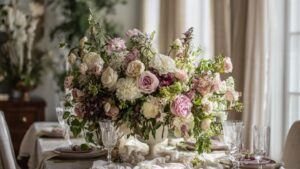
The most common flower decor mistake: too many small arrangements scattered everywhere. They read as effort without impact.
From minimal single-stem arrangements to lush layered displays, florals are becoming a key element in creating spaces that feel alive and thoughtfully styled.
One large arrangement on a dining table or console does more than five smaller ones across the room. The scale creates a focal point. Smaller pieces compete with each other and cancel out.
Start with one. Get it right. Then decide if anything else is actually needed.
2. Place Flowers Where Natural Light Hits Them
This is the single most underused flower styling trick — and it costs nothing.
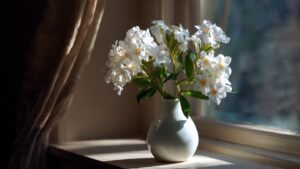
Positioning florals where light hits naturally can completely change their impact. Let the sun do some of the styling for you.
A vase of white blooms beside a sunlit window does something dramatic: the petals almost glow, catching light in a way that makes the arrangement feel like part of the architecture rather than something sitting on a surface.
Move your existing flowers to the nearest window position and see the difference in 30 seconds.
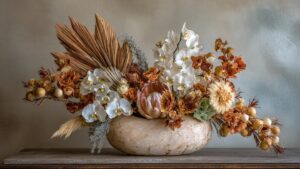
3. Try the Dried-Fresh Hybrid Arrangement
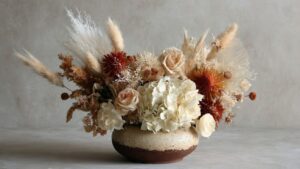
This flower trend beautifully merges preserved elements such as pampas grass, dried palms, or preserved hydrangeas with vibrant fresh blooms. This hybrid style offers visual intrigue, longevity, and a striking contrast between soft petals and wild, dry textures — making arrangements both stylish and long-lasting.
The practical benefit: your arrangement lasts weeks instead of days. The dried elements stay beautiful long after the fresh blooms fade. Replace only the fresh portion when needed — the dried base stays.
This is particularly effective in boho or earthy-toned rooms where the contrast between soft petals and textured dried stems reads as intentional rather than accidental.
4. Style Your Entryway Console With Flowers
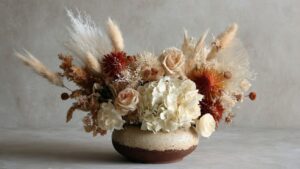
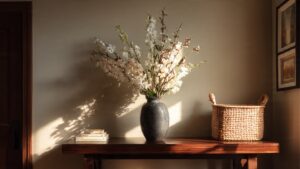
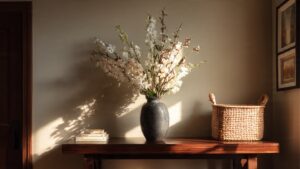
A simple console comes alive with a tall vase of white stems and just a hint of greenery. It’s clean, unfussy, and sets a welcoming tone the moment you walk in the door. Pairing florals with textured baskets and soft lighting adds warmth without clutter. Keep your arrangement tall and airy so it draws the eye upward while keeping the surface feeling open.
The entryway is the first thing anyone sees. A single tall arrangement on the console table sets the tone for the entire home before a guest walks past the door.
Choose a vessel that’s at least 12 inches tall. The height draws the eye upward and makes narrow entryways feel more generous.
I rearranged my entryway three times before I put flowers on the console. It was the only change that made the space feel genuinely finished.
5. Use Flowers to Break Up Styled Shelves
Tucked between books and art, a small floral arrangement adds softness to structured shelving. It breaks up the lines and brings a sense of movement. Layer flowers with objects of varying heights — it keeps shelves from feeling static and adds that collected, personal feel.
Books and objects alone make shelves feel like storage. One small bud vase with 2-3 stems tucked between books adds the organic softness that makes a shelf look styled rather than organized.
The flower doesn’t need to be large here. A single stem in a small vessel does the job — the contrast between the rigid book spines and the soft petals is the whole point.
6. Create a Floral Moment on the Coffee Table
A low, rounded arrangement sits effortlessly on the coffee table, blending into a palette of soft neutrals and natural textures. It feels like the kind of space where afternoons stretch a little longer. Keeping florals low makes the room feel more relaxed and livable.
The key word here is low. Coffee table arrangements should sit below eye level when you’re seated on the sofa — roughly 8-12 inches above the table surface. Higher than that and you’re blocking sightlines across the room.
A wide, shallow bowl with flower foam and mixed blooms works better than a tall vase for this placement. The spread reads as generous without the height.
7. Use a Single Stem in an Elegant Vessel
A neutral vase filled with soft pink cosmos feels understated in the best way. The texture of the vessel adds depth while the airy stems keep everything light and uncluttered. This is where restraint really shines — choose one type of flower and let it speak.
One beautiful stem in a well-chosen vessel is a complete decorating statement. It works on a nightstand, a bathroom shelf, or a kitchen windowsill.
The vessel matters more here than anywhere else. A single stem in a cheap vase looks like an afterthought. The same stem in a ceramic or glass vessel with some visual weight looks curated and intentional.
8. Let Flowers Follow Architectural Lines
Let arrangements follow architectural lines — railings, curves, corners. It makes everything feel intentional, like the flowers were always meant to be there.
This is the trick that makes floral decor feel like interior design rather than decoration. Instead of placing flowers against a wall as a separate element, position them to trace or echo something architectural: the curve of a staircase, the line of a mantel, the edge of an open shelving unit.
The flower arrangement becomes part of the room’s structure rather than something sitting in front of it.
9. Style the Bedroom With Flowers for a Retreat Feel
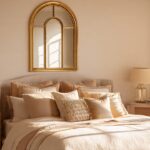
Soft lighting and delicate blooms transform this bedroom into a restful retreat.
A small arrangement on the nightstand — 3-5 stems in a simple vessel — changes the feeling of a bedroom more than almost any other single addition. It signals care. It makes a room feel tended to.
Choose flowers with a light fragrance for bedrooms — lavender, roses, or sweet peas. Avoid heavily scented flowers that can be overpowering in a closed room at night.
10. Use Flowers to Add Color Without Commitment
Painting a wall is permanent. Buying a new sofa is expensive. Flowers give you color for the cost of a bunch from the market and you can change it next week.
In 2026, spring decor is all about keeping things simple and letting flowers take the spotlight. From soft natural arrangements to minimal floral accents, this trend focuses on creating a fresh airy feel without overcomplicating your space.
If you want to test a color in a room before committing to paint or textiles, try it in flowers first. A room that’s been all-neutral for years can handle a bold pink or deep burgundy arrangement — it’s removable and costs under $20.
11. Group Multiple Vessels Together
Grouped arrangements in a woven tray bring a layered countryside charm. Tulips and delicate fillers sit in textured pots, creating a cluster rather than a single focal point. Mixing vessels like this adds depth without feeling styled to perfection.
Three different vessels of different heights, grouped on a tray, create more visual interest than one large arrangement at the same total cost. The grouping reads as collected over time rather than purchased as a set.
The tray matters it ties the group together as one intentional composition rather than three separate objects placed close together.
12. Bring Flowers Into the Kitchen
The kitchen is the most used room in the home and the most neglected when it comes to flower decor.
A small arrangement beside the sink or on the kitchen windowsill takes 2 minutes to style and transforms the daily experience of cooking and washing up. It doesn’t need to be large. A single sprig of herbs from the garden in a small jar counts and it’s free.
Keep arrangements small in cozy spaces it makes everything feel more intimate and inviting.
13. Use Flowers to Soften Hard Surfaces
Here, florals sit among glossy finishes and sculptural decor, adding softness to a more polished setting. The contrast works beautifully organic against refined. Even a small arrangement can soften a room filled with shine and structure.
Marble counters, glass tables, metal furniture these surfaces look sophisticated but can feel cold. A flower arrangement introduces the one element hard surfaces can’t provide on their own: organic warmth.
The contrast between a polished marble surface and a loose, natural flower arrangement is exactly what makes both elements look better.
14. Choose Vessels That Work as Decor on Their Own
The best flower vessels look good whether they’re holding flowers or empty. A sculptural ceramic, a clear glass cylinder, or a woven basket — these pieces contribute to the room even when the flowers are gone.
Simple minimalistic designs celebrate visual texture and earthy elements — ivory with taupe, sage with barely-there tones of lilac or cream. This goes well with bold architectural elements in a modern minimalistic approach.
Avoid plastic vessels and cheap glass. They work only when flowers are in them — and even then, they undercut the arrangement. Spend the $20 on a good vessel once. Use it for years.
15. Let Some Arrangements Be Imperfect
This is the hardest instruction for most people to follow and the most important.
It’s a great example of letting flowers be a little imperfect. Don’t over-trim or over-structure — sometimes the natural shape creates the most charm.
Go for movement over symmetry. Let stems cross and lean so the arrangement feels alive, not arranged.
The most beautiful flower arrangements in real interiors are not the ones that look like they were done by a professional florist. They’re the ones that look like someone who loves flowers put them together quickly without overthinking it. That looseness is the hardest thing to achieve deliberately — and the most valuable quality a home arrangement can have.
Flower Home Decor Quick Reference Guide
What flowers work best for home decor in 2026?
Peonies, garden roses, and ranunculus lead for fresh arrangements. For dried decor, pampas grass, dried hydrangeas, and preserved eucalyptus are the top choices. The 2026 direction favors the dried-fresh hybrid — mixing both in one arrangement for longevity and texture.
How do I make flower arrangements last longer at home?
Change the water every 2 days. Cut stems at a 45-degree angle each time. Keep arrangements away from direct sunlight and heating vents. Remove any leaves that fall below the waterline — they rot quickly and shorten the life of the other blooms.
What vases work best for home flower decor?
Ceramic vessels in neutral tones, clear glass cylinders, and textured stoneware are the most versatile choices. The vessel should be no taller than two-thirds the height of the flowers. Avoid plastic and cheap thin glass — they undercut even the most beautiful arrangement.
How many flowers do I need for a home arrangement?
Less than most people think. A single stem in a good vessel is a complete decorating statement. For a living room coffee table, 5-9 stems in a low wide vessel is enough. For a console table, 7-12 stems in a tall vessel works well. The size of the vessel matters more than the number of flowers.